We’re Stronger Together
With your help, we can advance education and improve student success in our community.
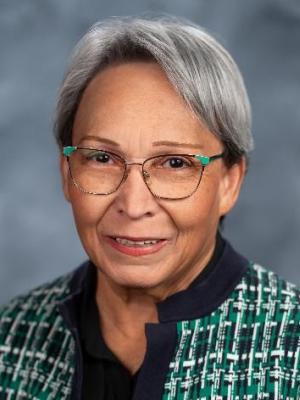
Professor, Pathology and Human Anatomy, Anatomy Division
There is no doubt that God had a plan for me at Loma Linda University. It was never in my plan, since I trained to be a practicing physician, and now I have the privilege to teach and learn from my students (and colleagues) since July 1993.
Purpose of education:
A strong education with a focus on fundamentals ensures students can take on any challenges that come their way.
Trying to turn my students into self-sufficient learners who use their resources to figure it out instead of resorting to just asking someone for the answers.
Philosophy of Teaching
My philosophy of teaching is to create an environment that allows for supervised exploration. I believe that the most significant learning occurs in situations that are both meaningful and realistic.
For me, the best way to accomplish these goals is through small group or one-on-one teaching, particularly in a clinically/laboratory relevant setting. The relevant setting is key: it allows the student to integrate knowledge into a useful framework and provides emotional resonance to the learning process.
I believe that all students in our professional program can learn and want to learn. It is my responsibility (and joy) to meet them where they are and move them forward. I am aware that, within their individual context, some situations do not help students use their potential. Also, motivations can change, but it is not up to me to make the decision of who gets the best of my intentions.
The basics
Teaching styles
Group work and discussions play a major role in my instructional style. I believe that students who learn to work cooperatively at the early stage of their professional training are better equipped to succeed in school, in their future careers, and in their communities.
I frequently use project-based learning in my classrooms because I believe it helps make learning more relevant to my students. When students work together to address real-world problems, they use their Anatomical knowledge and skills and develop communication and critical thinking abilities too.
Students and Learning Styles
I believe every student has their own story and deserves a chance to create and share it.
In my classroom, students take responsibility for their own success. I help them craft their own learning goals, then encourage them to evaluate their progress honestly and ask for help when they need it.
We are fortunate to have a very diverse student body. Students learn to recognize and respect each other’s differences, celebrating what each brings to the community. They also have the opportunity to find common ground, sometimes in ways that surprise them.
What teaching methods do I use?
For the didactic material, my preferred teaching method is “Student-Centered Approach to Learning,” but I must conform to Blended Learning, where the Flipped Classroom is half of the activity. Gross Anatomy for first-year professional students is very foundational and relatively new to the majority of students; therefore, they need guidance in order to fulfill the expectations of the Learning Objectives.
For the anatomy laboratory, collaborative learning, with specific rotating roles as they work as a team, using each other's skills and sharing their understanding of the 3D region, then teaching each other with the oversight of a faculty member, gives ownership to each of the students. They learn to be leaders, they become responsible for their learning and how they share it with their classmates, creating a common goal of learning together, and checking each other. It is a combination of hands-on activities, group discussion, learning stations, peer-teaching skills, role-playing, team-building exercises, and student presentations.
How do I assess my students’ learning and growth?
Didactic material assessment is integrated with quizzes and exams, which integrate other subjects, but we can also have statistics of how they did in the Gross Anatomy questions.
The medical Gross Anatomy lab practical examination has a preliminary activity, a self-assessment exercise, where every dissecting team participates. Explanation on this activity is upon request. Although this is not a required activity, close to 100% of students participate.
Then, there is the Anatomy Lab practical exam that assesses their learning on specific regions.
Qualities as a teacher?
Personally, I believe that one of my strongest qualities is my communication with the student, and I win their confidence, which helps me capture their level of knowledge and understanding of an anatomical subject. In guiding their learning, I begin by setting a strong foundation on which we can start building more knowledge. Sometimes, basic concepts are needed to be able to analyze more complex situations. My emphasis is on the utility of every piece of information, and not just giving isolated items to memorize. My motto in Anatomy is that every structure has a story and is also part of the story of a community of structures, and each structure influences distant structures. If one knows these key aspects of each structure, it would be less likely to forget.
Do I have an academic specialization?
I feel fortunate to have a foreign-trained medical degree because, during medical school, I was able to practice in a variety of specialties without worrying about lawsuits. For example, I did 42 deliveries during my OB rotation; only the first 10 were guided by the attending. I was also required to do 10 episiotomies. One of the reasons is that after graduating, we were required to practice as a solo rural physician for 6-12 months, so many procedures required immediate attention and couldn’t wait 2 hours for the ride to the bigger hospital. Also, it helped that I was in a dual residency (medicine & surgery) for 3 years.
How do I use technology in the classroom?
Many of my didactic responsibility is delivered by using techniques associated with Flipped Classroom: pre-recording via Panopto or Zoom, subject notes, videos to demonstrate the meaning and usefulness of the material during general practice situations. During the Flipped classroom activity, there are cases or short questions. The most used sources are Poll Everywhere, Kahoot, and Canvas. In these cases, students work as a team for a few minutes to choose the best answer.
I keep looking for the best new avenues, and many of those I learn from students. I cannot keep behind in technology because I feel we must be open to better teaching resources.
How do I motivate my students? Besides my recommendation on how to approach the anatomical sciences knowledge, I remind them that the best practice of medicine is working as a team. The knowledge is evolving, but regardless, the center is the patient, not the professional(s). The practice of medicine is not about me, but it is a team that includes the patient (who has the information of the case), who must plan and act in favor of dealing with a health issue. There is not one person who knows it all, and we need to work as a team, to be open to discussing and questioning any situation.
How do I think students learn best? Students learn best when they are in an environment where they can ask questions, can express their doubts, can express wrong understanding, and can be listened to. They learn best when the teacher acknowledges a question as foundational and teaches them the tools of how to find the best answer with the available tools.
How do I approach learners who are struggling? Struggling learners must be highly respected and not exposed to a group. Approaching them privately, offering help. Encouraging them to have a menu of questions as they go over the material, also to recruit other classmates who have questions, and schedule time to guide them in the discovery. They may need help in how to assess themselves and how to find reliable resources to fill in the knowledge gap.
My classroom management style. As I was searching for my ideal classroom management style(s), I found a website with 17 styles, and I deduced that I integrate several styles (https://helpfulprofessor.com/classroom-management-styles/ )
· Democratic (educators working with students to create the rules) if needed,
· Assertive (a teacher-centered classroom discipline model that highlights the rights of students and teachers to work in a safe, calm, and professional environment),
· Non-adversarial (use of positive rewards and incentives to avert conflict and promote constructive student behavior),
· Kounin (a proactive approach to classroom management, to prevent misbehavior in the first place)
· Coaching (development of students by guiding, encouraging, and giving them feedback. It is a student-centered approach that rests on a positive relationship between the teacher and student.) Unfortunately, time is an issue in including feedback.
· Behavior modification (a learner’s behavior can be shaped by reinforcement or punishment) - prefer emphasis on reinforcement.
· Humanistic or Unconditional Positive Regard (It advocates an overall supportive and respectful environment that meets students’ emotional and intellectual needs.)
· Ginott’s or behavior management (the teacher positions themselves as a facilitator.
How to define Learning. I do not have a short and meaningful definition of Learning. The Cambridge Dictionary defines it as “the activity of obtaining knowledge or a piece of information by study or experience.” A whole chapter can be written based on this definition.
How to define Teaching. Similar to Learning, I searched for a short, meaningful definition but found great articles that describe how the definition has evolved. Initially, it was believed that an expert was the only one able to teach. An article published in early 2019 in the International Journal of Education shows that there is no one way of defining teaching. The authors point out that teaching “denotes action undertaken with the intention of bringing about learning in another.” It also points out that the one who is teaching “makes the students aware of reasons for what they are doing and encourages them to be intelligent and reflective in the exercise of their skills.” (https://doi.org/10.34293/education.v7i2.329 )
What goals do I have for my students?
My always-evolving goal is to create scaffolding activities and guidance to help my students develop self-directed learning skills.
Knowles (one of the fathers of this concept) says that “Self-directed learning can be defined as the outcome of creating an experience that empowers learners to make decisions about the information they want to become proficient in.” A lifelong learner is a natural outcome of Self-Directed learners. The learner takes the lead and responsibility for what he/she need to learn to improve professional proficiency to serve best. A 2020 Article (Robinson & Persky, 2020) recommends flipped classrooms as an activity that “has the potential to move students towards self-directed learning.” I also like their recommendation to make this activity more effective is “by having students develop a small, individual learning plan on how they might further explore the course topic.
“For from him and through him and to him are all things. To him be glory forever. Amen.” Romans 11:36 ESV
Reference:
Robinson, J., & Persky, A. (2020, March). Developing Self-Directed Learners. American Journal of Pharmaceutical Education, 84(3), 292-296. Retrieved 11 06, 2025, from https://pmc.ncbi.nlm.nih.gov/articles/PMC7159015/pdf/ajpe847512.pdf
With your help, we can advance education and improve student success in our community.